
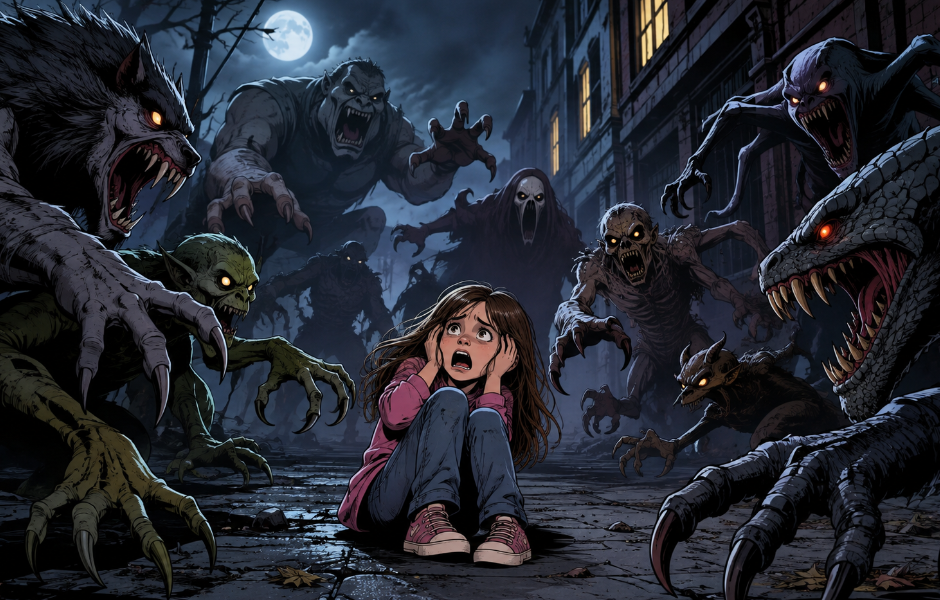
Growing up in chaos or suffering trauma early in life teaches you to be self-reliant and independent because your life depends on it. Even later in life, you realize one thing still rings true: no one is coming to save you. You must save yourself.
I love Kelly McDaniel’s book “Mother Hunger.” It explains so much so eloquently. The core idea is that newborns need a few main ingredients to grow up healthy and whole. The three core elements are nurturing, protection, and guidance. Kelly explains that if any of these, or worse yet, all of them, are absent from a child’s early development, they are left with deep-seated trauma, grief, and a stressed-out nervous system. Many children grow up anxious and angry and struggle to form healthy relationships because of it.
When you meet someone, fall in love, and start to develop deep bonds, these deficiencies eventually seep in and often undermine the relationship because we haven’t learned that we are lovable, that we are safe, or how to act like a normal, healthy adult in a relationship. We didn’t learn how because the people we learned from were also flawed.
I learned this the hard way.
We all bring so much baggage into our relationships, and that baggage dictates our behavior patterns, our reactions, and how we perceive our partner’s actions. Without these built-in biases, we may have healthier romantic partnerships and be proud of what we create with our special person.
Unfortunately, most of us don’t operate that way. We learn what we learn growing up, suffer traumas, and we never examine how these things might shape our adult relationships. Ignoring the problem doesn’t make it go away.
If, after a few failed relationships or even marriages, we find ourselves wondering whether something about “us” could be the problem, that is when the magic happens. Instead of blaming all the issues on our partner, if we step back and ask whether we could have done things differently, we can start to manifest change in ourselves.
You cannot begin to change until you become aware.
Like many people, when a relationship ended, I summed it up as not having found the “right” person yet. That is why it failed. That became much harder to believe when, after my 12-year marriage ended, I started a relationship with the love of my life, and that too ended in disaster. I finally started to wonder. Is it me?
It never occurred to me that my unhealed trauma and chaotic upbringing had anything to do with my skills in a relationship, but it was a direct result. I hadn’t learned how to act in a romantic partnership. I didn’t even know how to love myself; how could I expect someone else to?
After a particularly difficult surgery, my boyfriend left me, and I finally hit a sort of bottom. I was completely alone, weak, and traumatized once again. That is when I started to examine my own role in the breakup. I worked with a skilled tapping coach for two years, breaking down all my old traumas and finally stepping into the light. As I worked on these issues, I found myself looking back at the past with fresh eyes. I could see it wasn’t black or white; it was more nuanced, and I realized I had to change if I ever wanted a healthy partnership.
What I perceived as the worst time of my life was actually the best gift I could have received. I learned so much about relationships, myself, and what I need to be happy and healthy.
But I had to do it alone. I needed time and space by myself to start working on the personality traits I didn’t like about myself. No one could have swooped in and saved me. I have been taking care of myself since I was 16, and not having the core elements of nurturing, guidance, and safety that children need left me without certain coping skills. I had to learn them on my own, from scratch. One thing I didn’t like about myself was that I had become too dependent on him. I needed someone so badly to save me, and he felt it, which put too much pressure on him.
I have held the idea close that no one is coming to save you. I repeat that to myself often, and it helps to bolster my confidence and independence and get me through tough times. If I could survive what I already have, nothing can stop me now. I have a solid support system in my life, and that is important, but when it comes down to it, we are all essentially alone and must find a way to crawl out of the mud and save ourselves if we are to truly move forward in life.
My father died two and a half years ago, and my mother was completely dependent upon him. Her life since his passing has been very hard. She has had to do things she never had to do before. If she had developed more self-reliance before his death, this wouldn’t be so hard for her. I encouraged her to do so years ago, but she didn’t, and now she is like a child learning how to live life alone.
One of the key messages that I stress in my book “Real Life and Relationships Don’t Mix” is to develop strong independence and rely on yourself more so you don’t become too needy and dependent on another person. Many of us fall apart when that person is no longer in our lives. That is dangerous. If you don’t “need” people too much but love them unconditionally, you form a healthier bond. If something happens to them or the relationship, you will still be fine. In the end, you can save yourself. You can be your own best friend, and you are the constant that will keep you safe.
It’s not hard to develop self-reliance; you just need to begin. Start small with little things. Like my mother always had my father drive her to appointments. If she had started driving herself before he died, this new life wouldn’t seem so foreign. Developing independence is a skill, and I provide a roadmap for it in my book.
Whenever I feel scared or alone, I remind myself that during the toughest times of my life, I was the one who picked myself back up, put myself together, and moved forward. It’s comforting to know I will never let myself down, and that I’m always here for myself.
During stressful times, I reassure myself with statements like: “You’ve got this, Dawna,” “Everything is going to be just fine,” and “Just take it one step at a time.” I do this as I would comfort a friend, and it works!
You can be that for yourself too. Start now.


Leave A Comment
You must be logged in to post a comment.